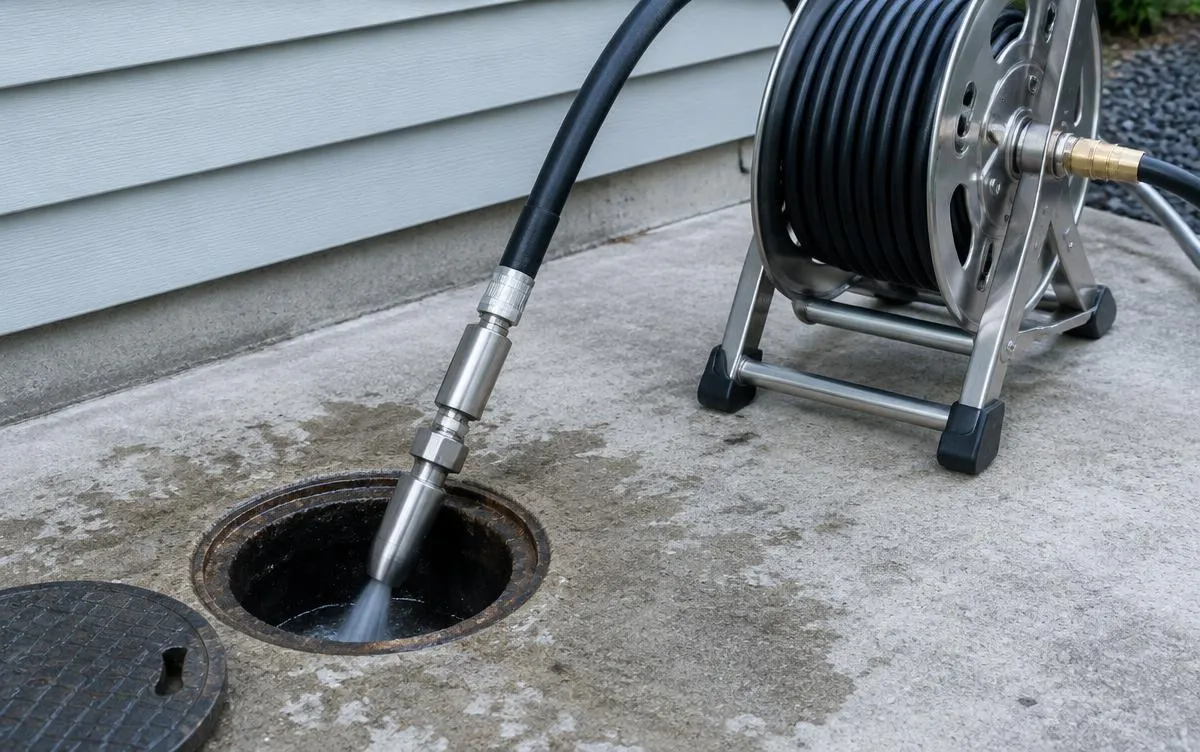
A cable machine punches a hole through a blockage; a jetter washes the pipe wall clean. High-pressure water — fed through a hose with a specialized nozzle — strips grease, scale and soft roots off the inside of the line and flushes them downstream. For kitchen lines that clog again weeks after cabling, jetting is usually the step that actually solves the problem.
Jetting is common on restaurant and church-kitchen lines between the kitchen and the grease interceptor or sewer, and on building drains serving multi-unit properties. It's also used on residential septic inlet lines where grease or sludge has narrowed the pipe.
When jetting makes sense
- A line that has been cabled more than once and keeps slowing down
- Grease buildup in kitchen lines — cabling opens a channel but leaves the coating
- Preventive cleaning on a schedule for commercial kitchens
- Soft root intrusion in building drains (heavy root masses may need cutting first)
What a jetting job involves
The contractor accesses the line through a cleanout, often runs a camera first to see what they're dealing with and to confirm the pipe is sound enough for pressure, then works the jetter upstream in passes. A final camera pass verifies the wall is clean and documents the pipe's condition.
That before-and-after video matters: it's how you know the line was cleaned rather than merely opened, and it surfaces cracks or bellies that cleaning can't fix.
What drives the price
- Line length and diameter, and how many cleanouts give access
- How heavy the buildup is — years of grease takes multiple passes
- Whether camera inspection is bundled
- Emergency timing versus scheduled maintenance
Need hydro jetting & line cleaning? Talk to a local pro.
Hydro Jetting & Line Cleaning questions
Will jetting damage old pipes?
Pressure is matched to the pipe. Fragile or already-cracked lines are why contractors camera first — if the pipe can't take it, they'll say so and quote the repair instead.
How is jetting different from snaking?
Snaking bores through a blockage to restore flow. Jetting scours the full circumference of the pipe wall, removing the buildup that catches the next clog.
How often should a kitchen line be jetted?
High-volume kitchens often schedule quarterly or semiannually; lower-volume operations go longer. A contractor can set the interval from what the first cleaning finds.
Related septic services
- Grease Trap Pumping — Scheduled interceptor pumping for restaurants, church kitchens and commercial kitchens.
See the towns we serve around Charlotte, and the typical cost ranges for this kind of work.