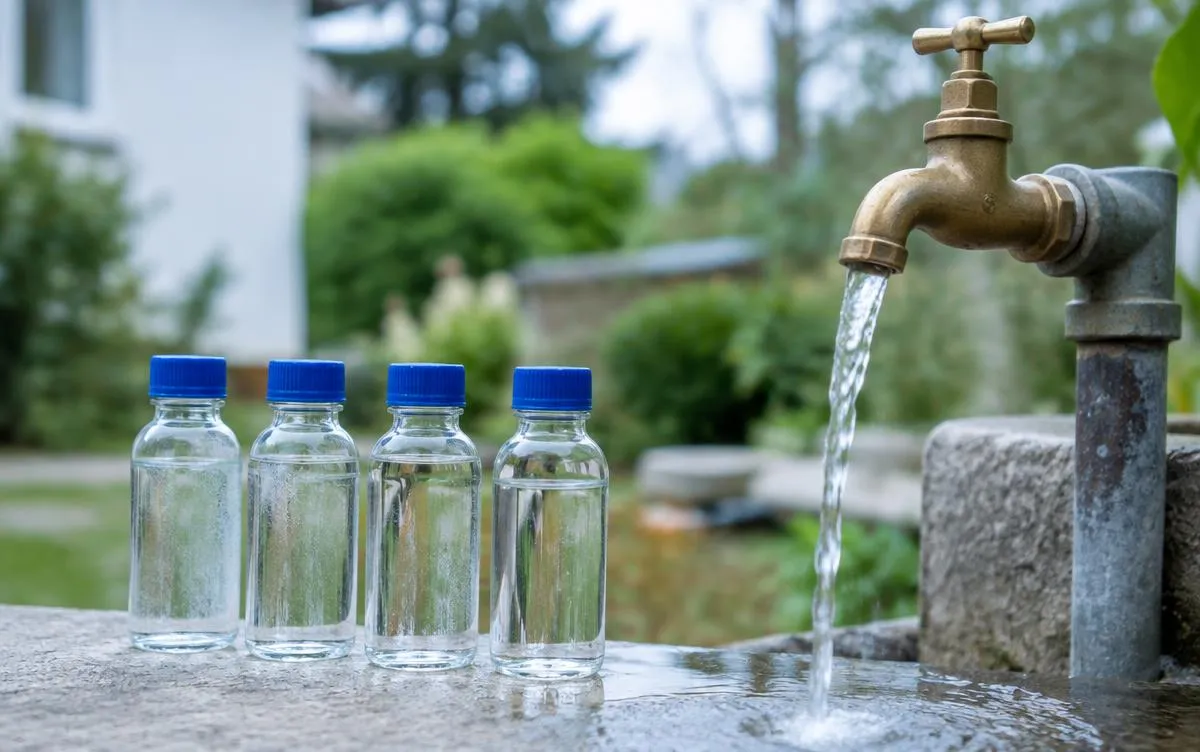
A private well has no utility watching over it — testing is the owner's job, and it's the only way to know what's actually in the water. Many of the things that matter most, like coliform bacteria and nitrates, are completely invisible, tasteless and odorless.
EPA guidance recommends testing private wells every year for total coliform bacteria, nitrates, total dissolved solids and pH, and after any event that could affect the well: flooding, repairs to the pump or casing, a new baby in the house, or a change in taste, odor or color.
What a standard panel covers
- Total coliform bacteria and E. coli — the basic safety screen
- Nitrates — a particular concern for infants
- pH and total dissolved solids — indicators of corrosiveness and overall mineral content
- Iron, manganese and hardness — the common taste and staining culprits in Piedmont wells
How sampling works
Bacteria samples have to be collected carefully — sterile container, a tap that can be disinfected, no touching the inside of the cap — or the result tells you about your faucet instead of your well. Samples go to a certified laboratory, and results typically come back within days.
If a test comes back positive for coliform, the standard response is shock chlorination of the well and plumbing followed by a retest. Persistent positives point to a pathway into the well — a compromised cap, casing or grouting — that a contractor can track down.
What drives the price
- Which panel you choose — a bacteria screen versus a broad mineral panel
- Lab fees, which make up most of the cost
- Whether sampling is bundled with other well work
- Expedited turnaround when a closing date is involved
Need well water testing? Talk to a local pro.
Well Water Testing questions
How often should I test my well water?
EPA recommends every year for total coliform bacteria, nitrates, total dissolved solids and pH — and anytime something changes: flooding, well or pump work, or a shift in taste, odor or color.
The water looks and tastes fine. Why test?
Coliform bacteria and nitrates can't be seen, smelled or tasted. Appearance is not a safety indicator in either direction.
Do I need a test to sell my house?
Requirements vary by lender and county, but buyers of well properties commonly request a bacteria and nitrate test. Having recent results ready avoids a closing delay.
Related well services
- Well Pump Repair — No water, low pressure or a cycling pump — diagnosis and repair of submersible and jet pumps.
- Submersible & Jet Pump Replacement — Full replacement of worn-out submersible and jet pumps, sized to the well and household.
- Well Water Treatment & Filtration — Filtration, softening and disinfection sized to what your water test actually shows.
- Well Pressure Tank Replacement — Waterlogged or failed pressure tanks swapped and set to the correct air charge.
- Well Services — New well drilling, plus inspection and maintenance guidance for existing wells.
See the towns we serve around Charlotte, and the typical cost ranges for this kind of work.