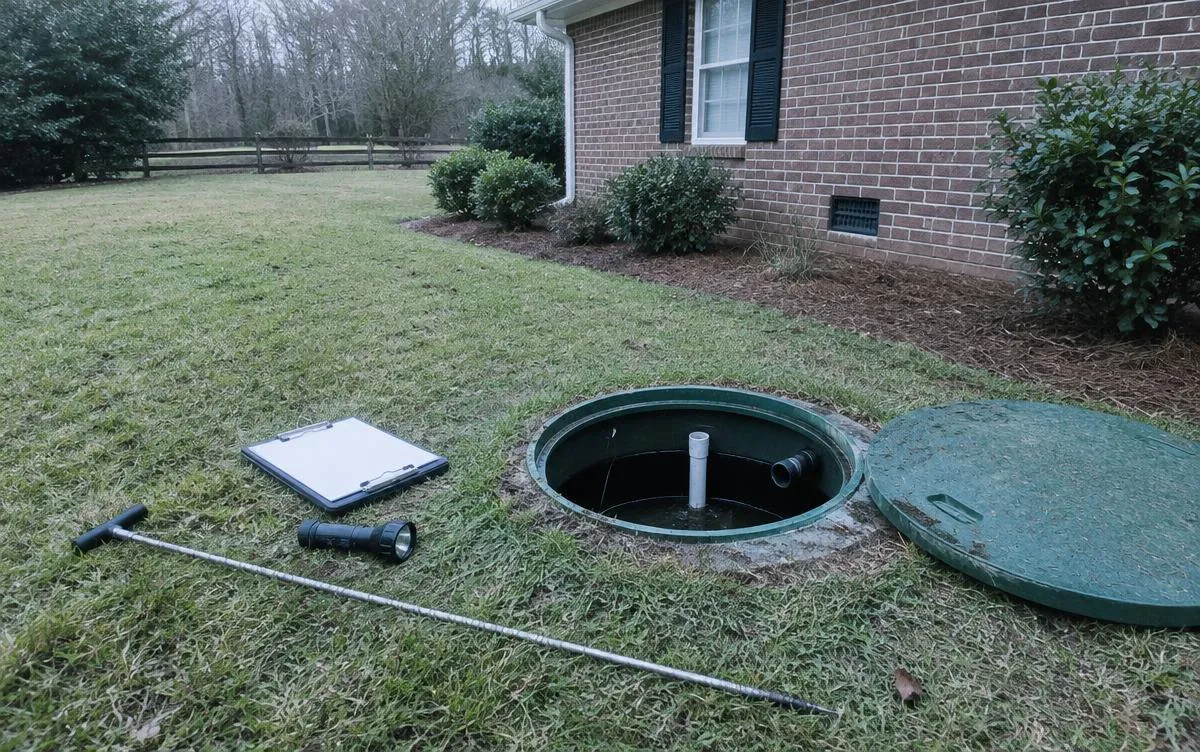
A general home inspection usually stops at flushing toilets and running taps. It doesn't open the tank, measure sludge, or tell a buyer whether the drain field is near the end of its life. That's what a septic inspection is for — and on an unsewered property it's one of the largest unknowns in the transaction.
Neither North Carolina nor South Carolina requires a septic inspection to sell a home statewide, but lenders and buyers commonly ask for one, and sellers who order one before listing avoid a surprise during due diligence. Findings come back in writing: tank size and condition, baffle and filter state, sludge level, and how the field performed under a flow test.
What the inspection covers
- Locating the tank and confirming its size against the number of bedrooms
- Opening the tank to measure sludge and scum layers
- Checking inlet and outlet baffles and the effluent filter
- Running a flow test to see whether the drain field accepts water
- Looking for signs of surfacing effluent or past repairs
What happens with the findings
A clean report is a selling point. A report that finds a failed baffle or an overdue pump-out usually leads to a straightforward repair or a service before closing. Findings that point at the drain field are where negotiations get serious, because field replacement is the largest septic expense a homeowner faces — which is exactly why buyers order the inspection.
County environmental health offices hold the original permit records for many systems, and an inspector will often pull them to compare what was permitted against what's in the ground.
What drives the price
- Whether the tank location is known or has to be traced
- Whether lids are at grade or need digging
- Whether a pump-out is bundled with the inspection — many inspectors prefer to see an empty tank
- How quickly the report is needed against a closing date
Need septic inspection for home sale? Talk to a local pro.
Septic Inspection for Home Sale questions
Should the buyer or seller order the inspection?
Either can. Sellers who order one before listing control the timing and can fix small issues first; buyers often order their own for independence. What matters is that someone does.
Does the tank get pumped during the inspection?
Often, yes — inspectors can see the tank walls and baffles properly only when it's empty. Some quote inspection and pump-out together.
What if the system fails the inspection?
The report documents what failed. Minor items are repaired; a failing drain field becomes a negotiation over price, repair escrow, or who handles replacement before closing.
Related septic services
- Septic Tank Repair & Replacement — Cracked lids, failed baffles, broken lines — and full tank replacement when repair isn't enough.
- Drain Field Repair & Replacement — Soggy yards and backups traced to the leach field — spot repairs or a full new field.
- Septic Tank Pumping — Routine pump-outs that keep sludge and scum from reaching the drain field.
- New Septic System Installation — Permits, soil evaluation, tank and drain field for new builds and failed-system replacements.
See the towns we serve around Charlotte, and the typical cost ranges for this kind of work.