Installing a septic system is one of the few home projects where the design is dictated by the ground rather than the house. Before anything is drawn, the county evaluates the soil — texture, depth to rock or water table, and how fast it absorbs water — and that evaluation determines the type and size of system the lot can support.
In Mecklenburg County, Environmental Health's Groundwater & Wastewater Services office permits new systems and publishes a $650 fee for a new residential septic system; surrounding North Carolina counties permit through their own environmental health offices, and South Carolina lots go through the SC Department of Environmental Services. Fees change, so confirm with the office before budgeting.
How an installation unfolds
- Soil evaluation and site plan — where the tank, field and repair area will sit
- County permit application based on the evaluation and the home's bedroom count
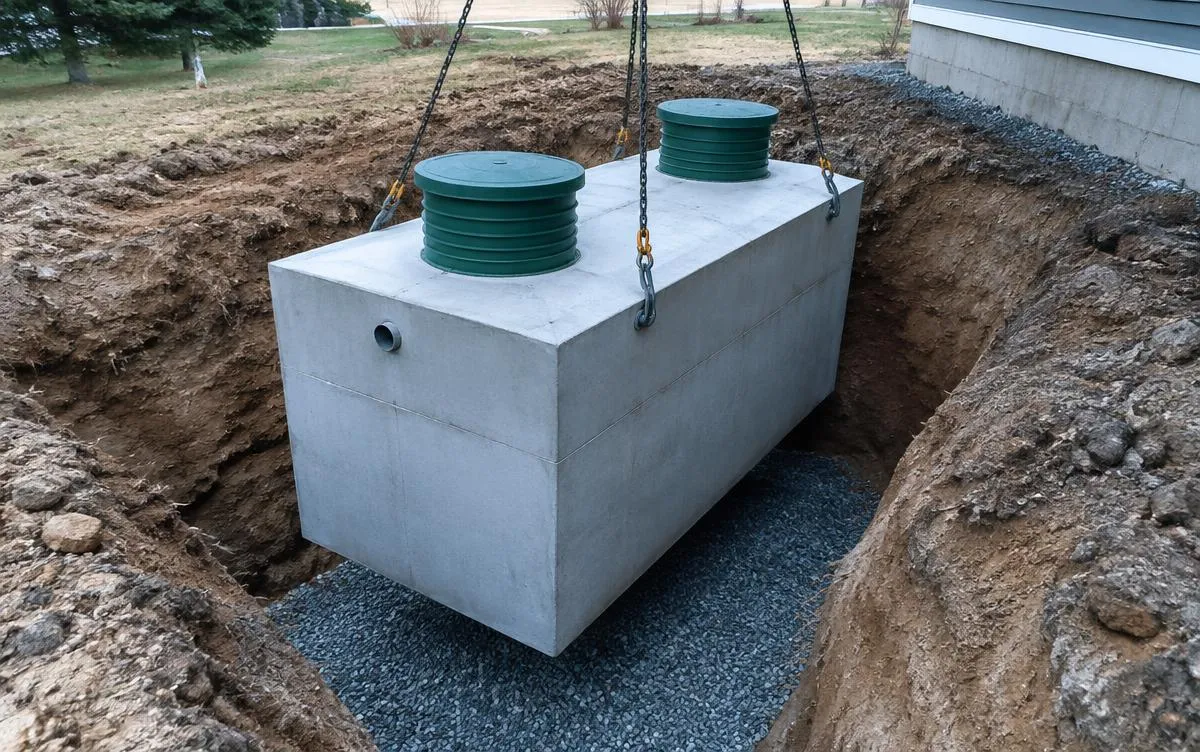
- Excavation and setting the tank on a prepared, level bed
- Laying the drain field — trenches, chambers or an alternative design if soils require it
- County inspection, then backfill, grading and seeding
Choices that come up
Tank material
Precast concrete is the long-standing standard. Fiberglass and polyethylene tanks resist corrosion and are lighter to set, but must be handled carefully where the water table is high.
Conventional versus alternative fields
Lots with slow clay, shallow rock or a high water table sometimes need chamber systems, low-pressure dosing or other approved alternatives instead of gravity trenches.
Risers and filters
Bringing lids to grade and adding an effluent filter at installation are small costs that make every future pump-out cheaper and protect the new field.
What drives the price
- Soil and perc results — poor soils mean larger or engineered systems
- System size, which follows bedroom count
- Slope, trees, rock and access on the lot
- Permit fees and any required engineering
Need new septic system installation? Talk to a local pro.
New Septic System Installation questions
How long does installation take?
The excavation and setting work typically runs a few days once permits are in hand. The permitting and soil evaluation phase usually takes longer than the digging.
Can a lot fail the soil evaluation?
Yes — some lots can't support a conventional system. Sometimes an alternative design gets approved; occasionally a lot isn't buildable on septic at all. It's worth evaluating before you buy land.
Who handles the permits?
The installing contractor normally prepares the application and schedules the county inspections as part of the job.
Related septic services
- Septic Tank Repair & Replacement — Cracked lids, failed baffles, broken lines — and full tank replacement when repair isn't enough.
- Drain Field Repair & Replacement — Soggy yards and backups traced to the leach field — spot repairs or a full new field.
- Septic Tank Pumping — Routine pump-outs that keep sludge and scum from reaching the drain field.
- Septic Inspection for Home Sale — Pre-listing and buyer inspections with written findings on tank and drain field.
See the towns we serve around Charlotte, and the typical cost ranges for this kind of work.