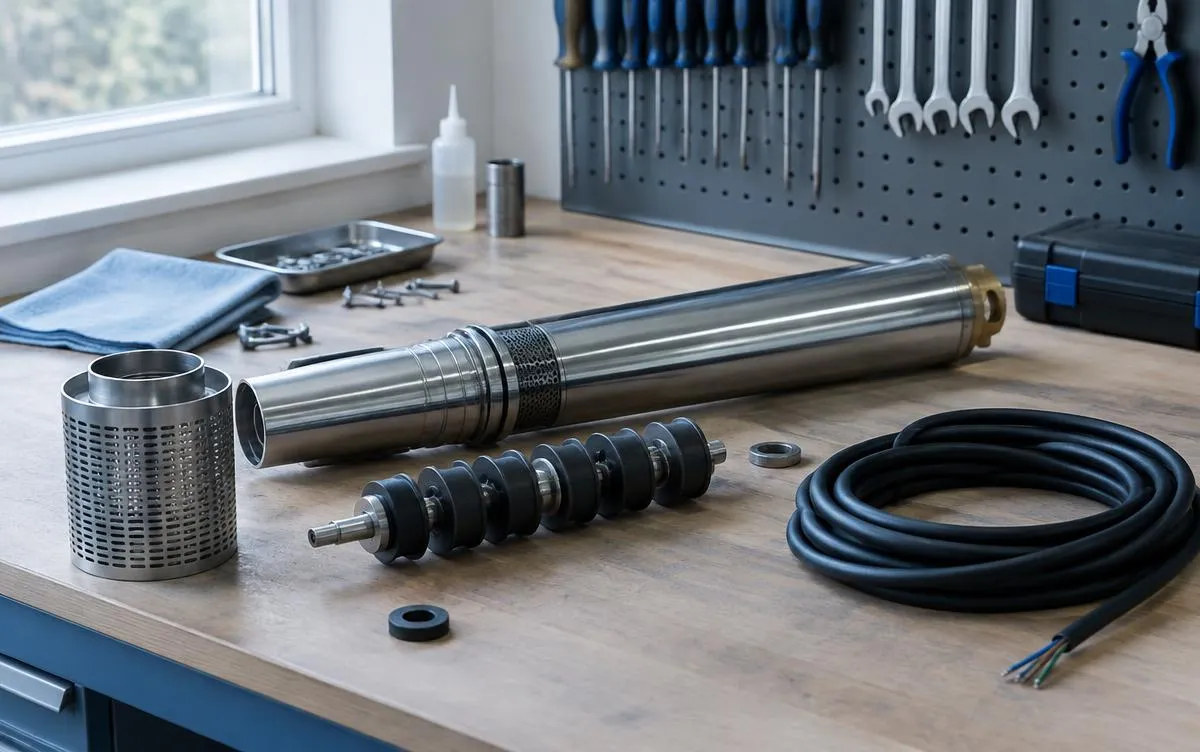
When a well stops delivering water, the pump is the obvious suspect but not always the guilty one. The pressure switch that tells the pump when to run, the pressure tank that stores water between cycles, the control box and the wiring all sit between the pump and your tap, and each fails in its own way. Good diagnosis comes before any parts are pulled.
Submersible pumps sit down inside the well and push water up; jet pumps sit at the surface and pull. Most Charlotte-area homes drilled in the last few decades have submersibles. Both are repairable, but the repair-versus-replace math depends on the pump's age and what failed.
Signs the pump system needs attention
- No water at any tap — check the breaker first, then call
- Pressure that surges or fades while a tap runs
- The pump switching on and off every few seconds (short-cycling)
- Air spitting from faucets, or sediment that wasn't there before
- The pump running constantly without building pressure
What diagnosis and repair involve
The contractor starts at the surface: breaker, pressure switch, control box and the air charge in the pressure tank. Many no-water calls end here — a failed switch or a waterlogged tank is a modest repair compared to pulling a pump.
If surface checks pass, the pump itself comes under suspicion. Pulling a submersible means lifting the drop pipe, pump and wiring out of the well — the labor that makes down-hole work cost more. The pump is tested, and depending on age and condition it's repaired, or replaced and the old one hauled away.
What drives the price
- Whether the fault is at the surface (switch, tank, wiring) or down the well
- Well depth — deeper pumps mean more pipe to pull and heavier equipment
- Pump type and horsepower
- Pressure tank condition, if it needs replacing at the same time
- Emergency or weekend timing
Need well pump repair? Talk to a local pro.
Well Pump Repair questions
What should I check myself when there's no water?
Check whether the well breaker has tripped and whether other electrical things in the house work. Reset the breaker once. If it trips again, stop — repeated resets can damage the pump — and call.
Why does my pump keep turning on and off?
Rapid cycling usually points to a waterlogged pressure tank or a failed pressure switch rather than the pump itself. It's worth fixing promptly: constant starting is what wears pumps out early.
Is it worth repairing an older pump?
If the pump is near the end of its typical working life and already out of the well, most contractors will recommend replacement — the labor to pull it is the same either way, and an old pump put back is a second service call waiting to happen.
Related well services
- Submersible & Jet Pump Replacement — Full replacement of worn-out submersible and jet pumps, sized to the well and household.
- Well Water Testing — Lab testing for bacteria, nitrates and common well-water concerns, with a clear report.
- Well Water Treatment & Filtration — Filtration, softening and disinfection sized to what your water test actually shows.
- Well Pressure Tank Replacement — Waterlogged or failed pressure tanks swapped and set to the correct air charge.
- Well Services — New well drilling, plus inspection and maintenance guidance for existing wells.
See the towns we serve around Charlotte, and the typical cost ranges for this kind of work.